Some travel decisions are about ticking boxes. A Morocco surf trip isn't one of them. You don't fly here for the highlight reel — you come because something about a long right-hand wave breaking under cliffs has gotten into your head, and the only way out is through.
Why Morocco's surf coast is different
Morocco's surf coast doesn't try to be Bali. The water is colder, the waves more honest, the towns less pretty. What you trade pretty for is character — fishing villages where the same families have lived for generations, road-side mechanics who'll fix a flat for the price of a tea, and a coastline that's been quietly producing world-class waves long before Instagram showed up.
The stretch we're talking about is short — about 80 kilometers between Anza in the south and Imsouane in the north. But pack inside it, you've got six or seven world-class breaks, three distinct villages with different vibes, and a coastal road that's a trip in itself. This guide covers the three spots that matter most: Taghazout (the buzzy one), Tamraght (the chiller neighbor), and Imsouane (the remote magic). I'll tell you what each is good for, what waves to expect, and how to plan a trip that actually fits what you came for.
Taghazout: the famous one
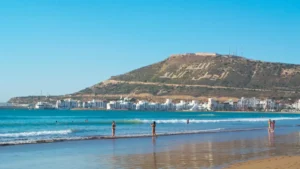
Taghazout is what most people picture when they think "Morocco surf trip." White-and-blue houses stacked on cliffs above a working harbor, surf cafés on every corner, and Anchor Point a five-minute walk from the main square. It's been the center of Morocco's surf scene since the '60s, and despite the recent crowds, it still has a real soul.
The famous wave is Anchor Point — a long right-hand point break that, on a good day, gives you 200-300 meter rides. It's not a beginner wave. The takeoff is over rocks, the section near the inside can be heavy, and the lineup gets thick fast. But on the right swell with the right wind, Anchor is one of the best right-handers in the world. If Anchor isn't working or is too crowded, the alternatives are close. Killer Point, just north, is faster and more punishing — for advanced surfers only. Mysteries, between Anchor and Killer, is fickle but rewarding. Hash Point, the wave directly in front of the village, is the friendliest option — softer, more forgiving, where most schools take their students.
Anchor Point is best on a north or northwest swell with east or southeast winds (offshore). October to March is high season for size and consistency. Pre-dawn paddle-outs aren't optional in winter — they're the difference between sharing the wave and sharing it with 40 people.
Tamraght: the chiller neighbor
Five kilometers south of Taghazout sits Tamraght — same coast, same waves within driving distance, but a completely different vibe. Where Taghazout has the buzz, Tamraght has the breakfast spots, the slow afternoons, and the surf school crowd that's there to learn rather than chase the heaviest swell.
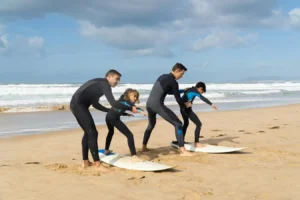
The home wave is Banana Beach — a beach break at the south end of the village. Sandy bottom, multiple peaks, more forgiving than the rocky points up north. It's where most surf schools run lessons because the conditions are usually doable for beginners and intermediates. Devil's Rock, just north of Banana, is the rocky reef break for when you're ready to step it up. The reason most people I know who've spent time in Morocco end up basing themselves in Tamraght isn't the waves — it's the cost and quality of life. Accommodation runs 30-40% cheaper than Taghazout. Cafés are full of people working from laptops. The yoga and surf schools attract a long-stay community of travelers in their 20s and 30s. You can drive to all of Taghazout's waves in 5-10 minutes, but at the end of the day you come back to a quieter street.
Many travelers stay in Tamraght and drive up to Taghazout for the surf, then come back for everything else (food, work, sleep). It's the move I'd recommend for anyone staying longer than a week.
Imsouane: the remote magic
Imsouane is the trip you take when the others have gotten too busy. Eighty kilometers north of Agadir, eighty-five from Tamraght, tucked between cliffs at the end of a winding 17-kilometer road off the N1 — you don't drive here by accident. You come for a reason, and that reason is The Bay.
Magic Bay is the longest right-hand wave in Morocco. On a good day, you can paddle out, catch one wave, ride it for two minutes, walk back up the beach, and paddle out again. It's not the most challenging wave — it's a fat, slow, mellow ride that suits longboards and beginners better than aggressive shortboarders. But the length, the setting, and the soul of the place make it unlike anywhere else on this coast. If The Bay isn't working, Cathedral Point sits just outside the village — punchier, more typical reef break, harder takeoff. The drive south to Tamri or north to Tafedna opens up another set of mostly empty surf spots, none with names on Google Maps.
Imsouane has no supermarket, no pharmacy, no bank. Stock up in Tamri before you arrive, or budget a 90-minute round-trip for any serious shopping. Most surf camps include meals, which simplifies life.
When to come
Morocco surf season runs roughly October through March, with the biggest, most consistent swells from December to February. This is when the points work — Anchor, Killer, Imsouane's Bay, Boilers up north. It's also when the lineups are most crowded and accommodation is most expensive.
April through June is shoulder season. Smaller waves, fewer crowds, warmer water. Beach breaks like Banana and Hash work fine, but the famous points need bigger swells to fire. This is the right time for beginners and intermediates who don't need every day to be epic. July through September is technically surf season but in practice the swell drops, the crowds change (more families, fewer surfers), and the wind gets onshore most days. You can still surf, but if you're flying across the world specifically for waves, this isn't the window. It's a fine time to come if you're combining surfing with general travel — Morocco is gorgeous in summer.
If you can only come once and you're chasing the famous waves at their best, aim for late November or early February. Mid-December and Christmas week get crowded; mid-January is often quieter than people expect.
How to actually get around
Public transport along the surf coast exists but isn't designed for surf trips. Local taxis run between Agadir, Tamraght, Aourir, and Taghazout regularly, but board transport is a constant negotiation. Once you go further north toward Imsouane, the bus options get sparse.
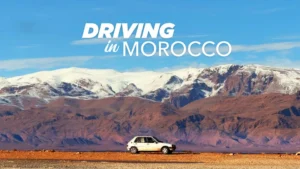
Almost everyone who comes for two weeks or longer ends up renting a car. The reasons are practical: chasing swell between spots, doing day trips to Paradise Valley or Agadir, hauling boards without paying daily taxi negotiations, and being able to leave at 5 AM for that pre-dawn session at Anchor without coordinating with anyone.
If you're staying in Taghazout or Tamraght, we deliver the car free of charge to your camp or hotel. Imsouane is far enough north that we charge a one-time €40 delivery fee — that covers our team driving up the coast and back. Most people who stay in Imsouane prefer this so they can fly straight into AGA, get picked up at the airport, and not deal with the logistics of getting up there with 3 boards. For the cars themselves, the Dacia Sandero Stepway is the surf coast favorite — a little higher off the ground for the rougher tracks, surfboards fit inside with the rear seats folded, and it's the cheapest option that handles real surf trips. The Dacia Logan is the same idea but lower; the Hyundai i20 is fine for solo travelers or couples without lots of gear.
If you fly into Agadir Al Massira (AGA), we meet you at Arrivals with the car ready — no shuttles, no counters, no card holds. This is the single biggest stress-saver for a surf trip, especially if you're landing late at night.
Where to stay (briefly)
I'm not going to do a full hotel guide here — surf camp standards change every year and the place that was best in 2024 might be average in 2026. But here's the framework I give to friends who ask:
For a serious surf-focused stay in Taghazout, look at Surf Maroc, Munga, or Paradis Plage. They have the surf coaching, the meals, the boards, and the structured days that work if you're new to the spots. For independent travelers, the dozens of small guesthouses in town give you full flexibility for half the price.
In Tamraght, the surf camps are more casual and more budget-friendly. Mint Surf Club, Surf Berbere, Olo Surf, and Tamraght Surf House all have decent reputations. For long stays (3+ weeks), Airbnb apartments along the coast road are often the best value. In Imsouane, options are limited but solid. Surf Berbere Imsouane, Magic Bay Surf Camp, and Imsouane Surf Camp are the three that come up most. Book ahead in winter season — Imsouane has very few rooms and they fill fast on a good swell forecast.
A typical 10-day surf trip plan
Here's the plan I usually suggest for first-time surf trips, with the assumption you're flying into AGA and have basic to intermediate surf level:
Days 1-4 in Tamraght: settle in, surf Banana Beach to find your feet, drive up to Taghazout for the famous spots when the swell is right. The Tamraght base gives you flexibility and lower costs. Pick up the car at AGA the day you land — it makes everything easier.
Days 5-7 in Taghazout: shift up to be closer to the points if the forecast looks good. Most surf camps offer 2-3 night packages, so you can split your stay easily. Anchor Point at dawn is the goal. Killer if you're confident.
Days 8-10 in Imsouane: the slow finale. Drive up the coast (it's a beautiful 1.5-hour drive, mostly along cliffs). Settle in, surf The Bay until your arms can't paddle anymore, eat fish in the harbor, watch sunsets from the cliff. Drive back to AGA on the morning of day 10 for your flight home. If you only have a week, cut the Imsouane part and split the time between Tamraght (4 days) and Taghazout (3 days). If you have two weeks, double the Imsouane stay — it's the part most people end up wishing they'd spent more time on.
The honest take
If you've made it this far, you probably already know what you want. Morocco's surf coast isn't the easiest trip — it's cold in the water, the famous waves get crowded, and getting around without a car is genuinely annoying. But it's also one of the few surf destinations left where the spirit of the thing still feels intact. Where you can paddle out at dawn next to a guy who's been surfing the same wave for forty years and just nods, because what's there to say?
The three towns we covered each give you a different version of the same coast. Taghazout for the energy and the famous waves. Tamraght for the slow life and the lower costs. Imsouane for the long ride and the deep quiet. Pick the one that matches what you actually want from the trip — not the one Instagram tells you is best. If you want help planning the car side of things, we're here. WhatsApp us anytime. We answer in Arabic, French, or English, usually within an hour. And if you want to book a car ahead of your trip, the link is right below.