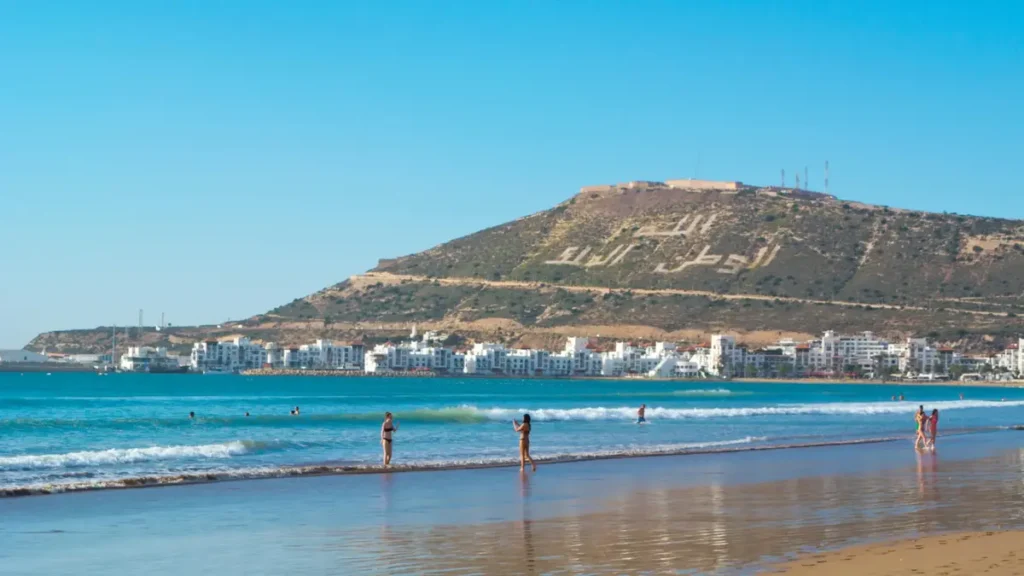
The short answer to "when should I visit Agadir" depends entirely on what you came for. The longer answer is what this post is — a month-by-month local view of weather, prices, surf, crowds, and the small differences that change the trip.
The quick answer
If you're prioritizing pleasant weather and avoiding crowds: April-May or September-October. These are the shoulder seasons — warm, dry, and quieter than peak.
If you're chasing surf: November-March is prime. Bigger swells, colder water (need a wetsuit), more reliable conditions at the points.
If you're looking for the warmest beach weather: June-September. Hottest air temperatures, calm seas, peak tourism.
If you want the lowest prices: January-February (excluding Christmas/New Year). Cheapest accommodation and flights. Worst time to visit Agadir: there isn't really one. Even in winter, the climate stays mild. But mid-July to mid-August can feel crowded and expensive if those things bother you.
Spring (March-May): the sweet spot
Spring is the best season for most travelers. The weather is mild (20-25°C / 68-77°F most days), the sea is starting to warm up, the wildflowers are out in the surrounding countryside, and the major surf points are still working through March.
Crowds are moderate. Easter week brings European holidaymakers but the rest of spring is calm. Surf camps run their best schedules. The roads to Paradise Valley and Imouzzer are at their most beautiful — green hills, clear streams, manageable temperatures.
May specifically is one of the best months — warm enough to swim, not yet too hot to hike, with the famous "goat in trees" stretch on the Essaouira road in full activity (it's argan harvest season). The Imouzzer honey festival happens in late May.
What to pack: light layers. Days warm, evenings cool. A light jacket for evenings is plenty.
Summer (June-August): peak season
Summer in Agadir is hot but not extreme — the Atlantic stays cool and moderates the temperatures along the coast. Daytime air hits 28-32°C (82-90°F), water around 20-22°C (warmer than spring).
The trade-off is crowds and prices. European tourists fill the beach hotels. Surf camps fill weeks in advance. Restaurants book out. Inland day trips (Paradise Valley, the Atlas Mountains) get busy on weekends.
Summer is a great time for casual beach holidays — long days, calm seas, plenty of food and entertainment. But it's not the best season for surf (waves are smaller and onshore winds dominate), and inland day trips can feel hot and rushed. What to pack: minimal — shorts, t-shirts, swimwear, sun protection. A light hoodie for occasional cool evenings.
Avoid mid-July to mid-August if crowds bother you. Many Moroccan families also vacation here in those weeks, doubling the typical tourist crowd. Early June or late August is better for the same warm weather with fewer people.
Autumn (September-October): underrated
Autumn might be Agadir's best-kept secret. The air is still warm (24-28°C), the water is at its warmest of the year (21-23°C), the surf starts picking up again as Atlantic storms return, and the crowds have mostly gone.
September is essentially summer without the summer crowd. October is shoulder season — fewer tourists than spring but the weather is still excellent. Both months are great for inland day trips since the heat has eased.
Surf-wise, late October starts to deliver real swells. The points come alive. If you're a surfer who wants the famous waves but doesn't want to deal with peak winter crowds, late October to early November is one of the smarter windows. What to pack: same as spring — light layers, swimwear, light jacket for evenings.
Winter (November-February): surf and quiet
Winter in Agadir is mild compared to almost anywhere in Europe. Daytime air ranges from 18-22°C (65-72°F), nighttime can drop to 10°C (50°F). Rain is occasional but rarely lasts more than a day. Sun is plentiful.
The water is colder — around 17-19°C (62-67°F). You'll want a wetsuit if you're surfing or swimming for any length of time. Most surfers use 3/2 wetsuits in mid-winter; recreational swimmers usually stay in for 15-20 minutes max without one.
The surf is at its best — biggest swells, most reliable points, and the crowds are mostly serious surfers rather than casual beachgoers. If you've come specifically for waves, December and January are ideal.
Christmas and New Year weeks are crowded with European holidaymakers escaping winter. Outside those two weeks, January is one of the quietest months of the year. Accommodation prices drop significantly. What to pack: light layers, including a proper jacket for evenings. A light rain jacket if you're hiking. Wetsuit if you're surfing. Otherwise standard travel gear.
January is often the quietest month for Agadir tourism, with the lowest accommodation prices of the year. If you don't mind cooler water and you want a quiet, off-season experience, late January is one of the best times to come.
Special considerations
Ramadan. Morocco observes Ramadan, which falls at different times each year (March-April in 2025, March 2026, February 2027). During Ramadan, daytime opening hours change — some restaurants close until sundown, others stay open mainly for tourists. Tourist hotels and Western restaurants generally maintain normal hours. Ramadan is a beautiful time to visit if you're respectful — evenings have a special atmosphere when the fast breaks. Plan to eat lunch in tourist-oriented places and join locals for iftar (sunset meal) where invited.
Eid holidays. Two major Eid holidays each year — most businesses close for 2-3 days. Plan around these if you have specific travel needs.
Surfing seasonality. Beach breaks (Banana, Hash Point) work most of the year. Famous points (Anchor, Killer, Imsouane Bay) are best November-March. Atlas Mountain trips. December-March can have snow on high passes (Tizi N'Tichka, Tizi N'Test). Spring and autumn are best for mountain day trips.
What I'd actually recommend
If this is your first Agadir trip and you have flexibility on timing, I'd recommend late April to early June or late September to early November. The weather is at its most comfortable, the prices are reasonable, the crowds are moderate, and you can do everything — beach, surf (some), inland day trips, mountain visits.
If you're a surfer chasing famous points, plan late November or early February. Avoid Christmas/New Year for crowds; avoid late January only if you really hate cold water.
If you want pure beach time and don't mind crowds, June and September are the warmest months for swimming. July and August work but are at peak tourism. If you want the cheapest possible trip with mild weather, January (excluding the first week) is excellent. Light tourist crowds, low prices, mild days, and quiet beaches.
The honest take
Agadir is one of the few destinations in the world that's genuinely good year-round. The climate is mild enough that even the "worst" months are pleasant. The differences between seasons are about what you want from the trip — surf vs. swim, crowds vs. quiet, mountain hikes vs. beach time.
Don't overthink the timing. If your dates are flexible, aim for the shoulder seasons (April-June or September-November). If your dates are fixed, the trip will be good regardless — just adjust your expectations and packing to match. If you have specific questions about timing, weather, or what to do at a certain time of year, WhatsApp us. We're here year-round and happy to give you specifics for your dates.