Three hours and twenty minutes. That's the honest answer if you don't stop and the road is empty. But nobody drives Agadir to Marrakech without stopping — not the first time, anyway. The route is short enough to do in a morning and beautiful enough to make you wish it was longer.
The route at a glance
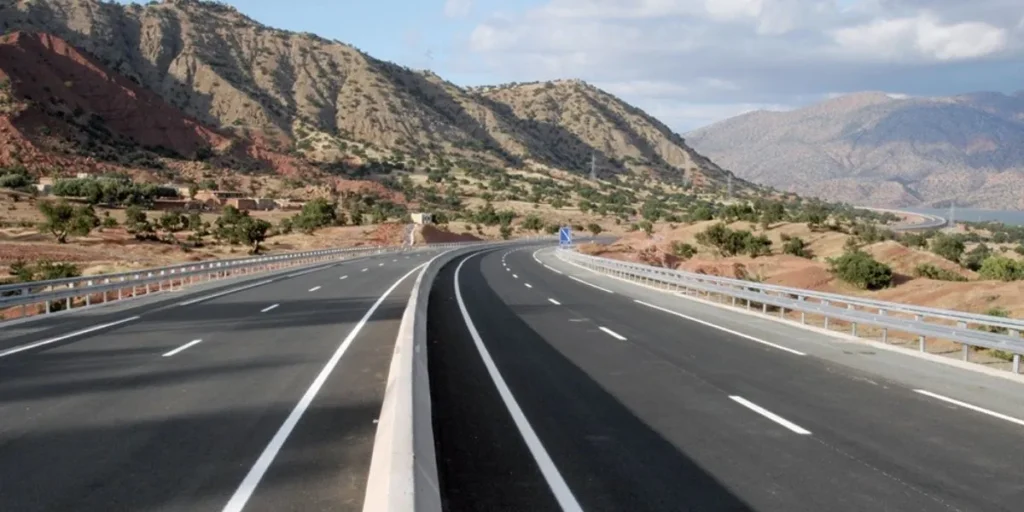
Agadir to Marrakech is 250 kilometers of well-maintained motorway — the A7, also called the Marrakech-Agadir Expressway. Two lanes each way most of the route, with paid tolls totaling around 80 dirhams (€8) per car. No surprises, no broken sections, no goats on the highway.
The drive takes 2 hours 50 minutes if you cruise at the speed limit and don't stop. With one rest break and a coffee stop, plan 3.5 hours. With a proper lunch in Argana or a detour to Imouzzer, you're looking at 4.5-5 hours. All of these are fine — the road is the kind that handles whatever pace you want. The route splits roughly into three sections. The first hour climbs gently out of Agadir into the Souss valley — flat, wide, fast. The middle hour winds through the Atlas foothills — slower, twistier, gorgeous. The final hour descends into the Haouz plain leading into Marrakech — wide open, easy driving, with the Atlas mountains rising on your right the whole time.
Set Google Maps to your destination before you leave Agadir. Cell signal is solid the whole route, but the phone in your pocket needs the destination locked in for offline backup. The two times I've seen people get lost on this drive, both involved a phone running out of battery somewhere around Argana.
When to leave
The best time to leave Agadir for Marrakech is early — between 7 and 8 in the morning. Three reasons: the light through the Atlas is unreal at sunrise, traffic out of Agadir is at its lightest, and you'll arrive in Marrakech for lunch with the whole afternoon to settle in.
Worst time to leave is between 4 and 6 PM. Marrakech traffic on arrival is at its peak. The light is gone before you finish the drive. And if you're heading into the Medina, finding parking in Marrakech after dark with luggage is the kind of thing that ruins arrivals. If you have to drive at night, the road is still safe — well-lit, well-maintained, no surprises — but you miss the views entirely. The Atlas section is the reason this drive is special. Doing it in the dark is like watching a movie with the screen off.
Section 1: Agadir to Argana (the warm-up)
The first hour out of Agadir is easy driving. Take the A7 northbound from anywhere in Agadir or AGA airport — signs are everywhere, you can't miss it. The motorway entrance is on Avenue des Far heading north, or directly from the airport's main exit road.
The first toll booth is about 20 km out — 30 dirhams (€3), pay cash or card. After this, the landscape opens up into the Souss valley: flat, agricultural, dotted with argan trees and small villages. You'll see roadside stalls selling argan oil, honey, and prickly pears — these are tourist-priced, but the products are usually authentic. If you want to stop, the cleaner ones are around Aoulouz.
Around km 80, the road starts climbing. This is the foothills entrance — the landscape changes from olive groves to rocky hillsides covered in argan and wild juniper. The driving stays easy but the scenery starts paying off. You'll cross the Argana junction around km 100 — this is the natural midpoint of the trip and the obvious place to stop.
The Argana stop (where to actually break)
Argana is 110 km north of Agadir, sitting at the entrance to the Atlas foothills. It's where every Moroccan family stops on this drive, and it's where you should stop too. The reason isn't the village itself — Argana is small and ordinary — but the row of roadside restaurants on the highway near the exit.
The most famous is Restaurant La Fibule, but they're all decent. Tagines, brochettes, mint tea, fresh bread. Lunch for two with drinks runs 100-150 dirhams (€10-15). The bathrooms are clean, the parking is free, and you'll lose 45 minutes here without trying — which is exactly the right break for this drive. If you're not stopping for a meal, the Afriquia gas station at the Argana junction has the cleanest bathrooms on the route, plus a small café for coffee and pastries. Fuel is the same price across all stations on the A7, but Afriquia stations tend to have the best amenities.
If you have time and energy, take the small detour off the A7 at Argana north exit toward Imouzzer Ida-Outanane (the "honey valley"). It's a 30 km detour each way through stunning waterfalls and Berber villages. Adds 2 hours to your total trip but worth it if you've got the day.
Section 2: Argana to Chichaoua (the beautiful part)
The hour from Argana to Chichaoua is the heart of this drive. The road climbs through the Atlas foothills, twisting between rocky cliffs and pine forests. It's still motorway — well-engineered, two lanes — but the scenery is what people remember.
Watch for the second toll booth around km 150 — another 25 dirhams (€2.50). The traffic remains light through this section, which surprises first-time drivers. Trucks are limited to specific lanes and the cars are spread out. You can drive most of this hour without seeing more than a few vehicles at a time. Around km 200, the road begins descending into the Haouz plain. This is where you get your first real view of the Atlas mountains — the High Atlas to the south and east, often snow-capped from December to March. Pull over at one of the official rest areas if you want to take pictures. There's nowhere better to stop on this entire route than the descent into Haouz around sunset.
If you spot snow on the High Atlas peaks, it's not just pretty — it tells you something about driving conditions. November to April, mountain passes south of Marrakech (Tizi N'Tichka, Tichka) can have snow on top. Keep this in mind if you're planning to drive further inland from Marrakech.
Section 3: Chichaoua to Marrakech (the home stretch)
The last hour to Marrakech is wide-open Haouz plain — flat, fast, easy driving. The motorway carries you straight into Marrakech's outer ring road. Speed limit drops as you approach the city: 120 to 100 to 80 to 60 km/h in well-marked stages.
The third and final toll comes at the Marrakech approach — around 20 dirhams (€2). Total tolls for the trip: roughly 75-80 dirhams (€7-8) one-way. Marrakech driving is straightforward outside the Medina walls — wide boulevards, clear signage, normal traffic. Most travelers head for Gueliz (the modern district), Hivernage (where most international hotels are), or one of the official Medina parking lots near Bab Doukkala or Bab Robb (around 30 dirhams per day). Don't try to drive into the Medina alleys — cars don't go more than a hundred meters in before the streets become foot-traffic only.
Gas stations, tolls, and money
Fuel up before you leave Agadir — the Afriquia or Shell stations on the road to AGA airport are the cheapest on the route. Diesel runs around 11.50 dirhams per liter, gasoline around 13. A full tank in our Dacia Logan does the round-trip Agadir-Marrakech-Agadir easily, with margin to spare.
Tolls cost about 75-80 dirhams each way (€7-8). Pay in cash or card — both work at every booth. Keep small change ready if you're paying cash; the booth attendants prefer 50 or 100 dirham notes. ATMs are available at the Agadir end of the route and in Marrakech, but not at the Argana stop or anywhere on the motorway itself. Bring enough cash for tolls and a meal before you leave. 200 dirhams in mixed bills is plenty for a one-way solo trip; 400 dirhams for a couple having lunch.
The Afriquia loyalty card (free to register at any Afriquia station) gets you a small discount on fuel — 10-20 centimes per liter. Worth it if you're doing this drive multiple times during your trip.
What to watch out for
Truck convoys in the Atlas foothills section. Slow trucks heading south to Agadir occasionally form long convoys on the climbs. The motorway has truck-only lanes for these, but traffic backs up briefly when one of them breaks down. Pad an extra 20 minutes into your timing if you're driving on a Friday or Sunday afternoon — Morocco's busiest motorway days.
Speed cameras. They're on the route, mostly fixed and well-marked. The speed limit is 120 km/h on the open motorway and 100 km/h around hill sections. Foreign drivers occasionally get fines that arrive at the rental company months later. Stick to the limits and you're fine.
Friday afternoons. The road is busier than usual on Fridays, with families heading home for the weekend. Avoid driving between 4 PM and 7 PM on a Friday if you can — you'll lose 45-60 minutes to traffic between Marrakech and Chichaoua. Phone GPS reliability. Google Maps works perfectly on this route, but the connection in the Atlas foothills section can drop briefly. Download the offline map for Morocco before you leave — it takes 5 minutes and you'll never need it, but the one time you do, you'll be glad.
What to do in Marrakech once you arrive
If you're arriving by lunchtime: drop the car at your accommodation, walk into the Medina, and have a tagine somewhere off the main square. The first afternoon in Marrakech is best done slow.
If you're arriving in the evening: dinner at a riad with rooftop terrace. The view from a Medina rooftop at sunset, with the Koutoubia Mosque in silhouette and the Atlas Mountains pink in the background, is the moment most travelers remember Marrakech for.
On day two: Jardin Majorelle, the Saadian Tombs, the Bahia Palace, and a long walk through the souks. On day three: a day trip to the Atlas Mountains (Imlil for hiking, Ouirgane for quiet, Ouzoud Falls if you have a full day). If you're driving back to Agadir after a few days: same route in reverse. The drive south is, if anything, more beautiful than the drive north — the Atlas behind you in the rearview, the ocean ahead. We rent cars one-way to Marrakech if you only need it for the drive there. Ask us about it.
The honest take
Agadir to Marrakech is one of the easiest road trips you'll do in Morocco — well-maintained motorway, clear signage, predictable timings, and beautiful scenery without the white-knuckle moments you get on mountain passes further inland. If this is your first Morocco drive, this is the right one to start with.
The two things first-timers consistently get wrong: leaving too late (rushed arrival, no light for the Atlas section) and not stopping at Argana (you skip the best meal of the trip and arrive tired). Leave by 9 AM, take the Argana break, and you'll roll into Marrakech feeling like you actually traveled there rather than just arrived. If you want help planning the car side — pickup at AGA, drop-off in Marrakech, or both ways — message us on WhatsApp anytime. We answer in Arabic, French, or English, usually within an hour. The road is yours; we just hand you the keys.